Tag: Therapy for Marginalized Communities

  • Spirituality and psychotherapy

    An excellent source of spiritual wellness is a sense of connectedness with nature.

    What is spiritually-integrated psychotherapy / spiritually-informed psychotherapy?

    Psychotherapy is interested in supporting the client’s mental world. The word “psychotherapy” is rooted in the Greek word psyche meaning “soul”. Despite the deep interconnectedness between spirituality and mental healing traditionally, more recently, spirituality has been estranged from mental health. Clients often report feeling uncomfortable bringing their spirituality into healthcare settings. Regardless, increasingly spirituality is understood as an important dimension of one’s health and wellness (Jaberi et al., 2019; Jones, 2019). This has implications for psychotherapy, in that it is one of the few places where spirituality can be embraced, understood, and integrated in an open, informed way. Still though, clients may not feel comfortable incorporating it without the support of their therapist. This underscores the importance of spiritually-informed psychotherapy.

    Spirituality has been understood as an important domain of wellness since time immemorial. Indigenous decolonization and reclamation efforts have underscored the importance of spiritual health, not just to Indigenous peoples, but to human beings (see Lloyd Hawkeye Robertson, 2014 and Erica Neeganagwedgin, 2013).

    Jaberi et al. explain that “spiritual health is a dynamic, developmental, conscious, multidimensional, and universal process that activates through spiritual awareness, personal capacity, and potentials for transcendence” (2019, p. 1551). At the same time, Jones (2019) speaks to how spirituality can be either healthy or unhealthy for each person, and part of the clinician’s job is to aid the client in their own understanding of what is healthy and what is not.

    Jaberi et al. (2019) explain how spirituality might be appropriately integrated into counselling:

    “The critical attributes of spiritual health were integrating existential aspects, nurturing transcendence, wholeness, and moderation, establishing harmonious interconnectedness, purposeful and meaningful life, and faithfulness” (2019, p. 1551).

    Through spiritually-integrated psychotherapy, it is possible to bring together all of these components to improve our clients’ spiritual health. For instance, supporting clients in navigating existential questions in relation to their sense of purpose and meaning can be an aspect of the psychotherapy through open discussion and validation.

    A rainbow in Montréal.

    LGBTQIA+ Spirituality, Spiritual Abuse, and Religious Trauma

    As therapists who aim supporting the diverse LGBTQ2IA+ community with a spiritually-integrated approach, the harm posed by many religions and spiritualities needs to be addressed. This harm hasn’t been limited to our LGBTQ2IA+ community alone. As Lloyd Hawkeye Robertson reminds us: “the religions of the colonizers were often agents of oppression, as evidenced by the church administration of […] Residential Schools” (p. 32). For LGBTQ2IA+ folks, they might have found organized religion (and therefore, unfortunately, their primary spiritual practice) to be places of racism, colonialism, homophobia, transphobia, sexism, and other forms of discrimination. Many of us have been robbed of our comfort with spirituality as a result of this harm. At the same time, I believe the queer and trans community deserves to be able to lean into spirituality as a source of strength and healing, if desired.

    For many of us, religion was where we were introduced to some ideas which made us feel excluded, unworthy of “the creator’s” love, unacceptable, etc. Dr. Joe Kort (a pioneer of LGBTQ2IA+ affirming psychotherapy) says that not only are queers made to feel isolated from others through homophobic and transphobic experiences, but they also are made to feel isolated from their higher power and from anyone in a religious or spiritual capacity. This is a major reason why clients are interested in a psychotherapy treatment which integrates spirituality, rather than stigmatizes or sidelines it.

    Although there are a growing number of organized religions which accept LGBTQ2IA+ folks, and some that accept sexual minorities but not gender minorities (or vice versa), it is difficult to enter these spaces when you are uncertain if the space will accept you. Even those places of worship which put up pride flags can sometimes feel suspect– are they putting a pride flag up for us? Or are they putting up a pride flag to assuade their guilt, without examining harms?

    Regardless of if we chose to practice our spirituality outside of organized religion or not, there are spiritual questions which inevitably accompany life. What is the meaning of life? How can I grieve a dear loved one? Do I have free will? Am I worth loving? (Yes). What do I think about death? These are important questions which ought to have room in the therapy office. LGBTQ2IA+ folks deserve to be able to contemplate and examine these questions in a safe, meaningful place.

    I see how for some folks, spirituality is deeply important for their sense of wellness. In our queer community, spirituality can be polarizing, either as a source of deep wellness, or a place of distrust and dysfunction met with profound skepticism. These are both valid understandings. Meaning and purpose does not require spirituality, but it can often be found alongside it. Personally, I like to find myself in the middle of these two places, trying to find the dialectical position of embracing spirituality’s power and awesomeness, while also being deeply critical of how it is often engaged unhealthily. 

    “Those who have a ‘why’ to live, can bear with almost any ‘how.’”

    -Victor Frankl, author of Man’s Search for Meaning, founder of Logotherapy, and Holocaust survivor.

    Existential psychotherapy

    I am deeply moved by the orientation to counselling offered by existential psychotherapy. This movement incorporates the critical tendency of existentialism with the benefits of meaning-making through an openness to spirituality and other forms of meaning-making. Its founder, Irvin Yalom, explains that this work focuses on “death, isolation, meaning of life, and freedom” (the four givens of life) (2009, p. xviii). He defines existential psychotherapy as a psychodynamic therapy which enables a “focus on concerns rooted in existence” (2009, p. xvi). An intentional effort towards developing your own understanding of these “four givens” can focus the work of therapy towards something profoundly meaningful. Beautifully, one’s ‘answer’ to these “four givens” can stem out of any religious or non-religious background: Islam, Judaism, Jainism, Christianity, Buddhism, Hinduism, Sikhim, Atheism, Agnosticism, or one’s own individual beliefs. Therapy enables you to have a structured space to confront these “four givens” in a safe, supported, and non-judgemental space.

    Learn more about spiritually-intergrated and existential psychotherapy

    As a spiritually-informed and existential psychotherapist, I always aim to support spiritual and non-spiritual clients in a client-centred way. Your values as a client shape the work more than anything else. I would like to ensure that spirituality can be welcomed into our therapeutic work to the extent you desire, while also ensuring it can be done so in a healthy way. I aim to approach therapy generally in a non-judgemental and anti-oppressive way, and I understand how this is doubly important to emphasize with clients who have experienced oppression (especially for their spiritual practices).

    If you are interested in spiritually-informed and integrative psychotherapy, you can request a free consultation here.

    “By keeping death in mind, one passes into a state of gratitude, of appreciation for the countless givens of existence. This is what the stoics meant when they said, ‘contemplate death if you would learn how to live.’”
    ― Irvin D. Yalom, Existential Psychotherapy
  • Queer-informed and affirming psychotherapy

    In recent years, queer-informed and queer-affirming psychotherapy has gained recognition as a vital approach for supporting LGBTQIA2+ individuals on their mental health journeys. This approach is separate from merely queer-allied and LGBTQ+-allied counselling/psychotherapy. It isn’t just about acknowledging sexual orientation or gender identity—it’s about understanding the unique social, cultural, and personal contexts that shape each client’s experiences, challenges, and strengths. Queer-informed psychotherapy goes beyond traditional frameworks by centering the lived experiences of queer people and addressing the impact of systemic discrimination, heteronormativity, and cisnormativity.

    Queer-informed therapists recognize that the issues LGBTQIA+ clients face are not solely internal but are deeply intertwined with societal structures– the outside world and its limited supports for non-normative sexualities and identities. This approach prioritizes creating a safe, nonjudgmental space where clients can explore their identities, process the effects of discrimination, and foster resilience. Whether queer folks are seeking support for anxiety, relationships, identity exploration, or trauma, queer-informed therapy prioritizes honouring their identity and experiences.

    Additionally, queer-informed therapy often involves an understanding of the broader LGBTQIA+ cultural landscape, including queer and trans trauma (like religious abuse, medical abuse, the coming-out process, familial abandonment, etc.), the validity of chosen families, gender affirmation, and the intersectionality of various identities. For example, clients might want to explore trauma processing, somatic work, spirituality, community, or creative self-expression as part of their healing process. By integrating these elements, queer-informed therapists offer a holistic approach that allows clients to heal and thrive as their authentic selves.

    Internalized homophobia and internalized transphobia

    Dr. Joe Kort emphasizes the importance of approaching “internalized homophobia” and “internalized transphobia” (and by extension, internalized queerphobia, lesbophobia, etc.) in working with the LGBTQIA2+ community. LGBTQ2+ folks endlessly engage in a meandering coming-out process. This is done either explicitly or implicitly as we navigate the culture. Coming-out inevitably becomes a part of the work, even if the client is at the end of this process. Coming-out is difficult, not uncommonly traumatic, and often needs tending to in some way.

    Coming-out

    Queer-informed psychotherapy, when relevant, centres the nuanced stages of coming out originally outlined by Dr. Vivienne Cass. These stages are always transitory– we queer and trans folks are rarely just in one stage.

    1. Identity confusion

    In this stage, folks are often confused about their sexuality and identity. You might be in denial about the feelings they are experiencing. You might take out this confusion in anger or sadness. You might come to therapy as you (or others) notice these emotions and confusion and seek help in understanding why this is.

    2. Identity comparison

    During identity comparison, folks are aware of their identity diverging from what they may have previously assumed. In this stage you might compare different identities/sexualities and what they mean to them (e.g., asexual, polyamorous, queer, gay, bisexual, cisgender, non-binary, etc.). You might take comfort or confusion in the plethora of possible identities out there. You might come to therapy for help in better understanding who you are.

    3. Identity tolerance

    Identity tolerance involves coming to terms with your self. You might not have the perfect label (many people never do), but you have come to tolerate that something about you is different than others. Tolerance (as opposed to acceptance) speaks to this difference not exactly being desired, but is observed and allowed. There isn’t denial (at least by yourself).

    4. Identity acceptance

    The shift from identity tolerance to identity acceptance is an important one, where not only is the difference in your identity known and understood, you have also accepted it as a part of who you are. It may or may not be an important part of your understanding of self, but you are able to accept it as a part of your self.

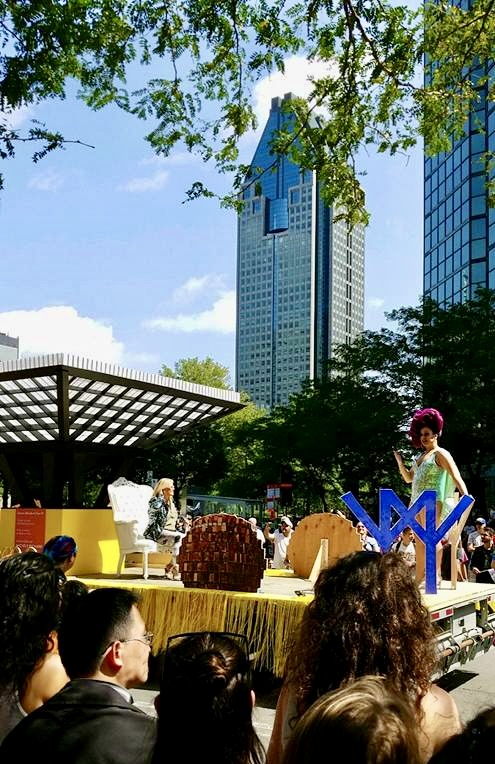
    At pride events around the world, LGBTQ2IA+ folks can celebrate their beautiful existence through art and gathering.

    5. Identity pride

    Identity pride is an interesting and exciting time for an LGBTQ2IA+ person. Sometimes folks refer to this stage as a “second adolescence” (especially when identity pride comes at a later time in life). This is because many of us did not have the opportunity to be fully ourselves during our actual first adolescence (which can be a source of trauma). During this stage, we might take advantage of many of the missed opportunities of our youth– especially in connecting to the broader community. Here, we can address our internalized homophobia/transphobia/queerphobia/…, and move into self-love. This is an important developmental stage. Take joy in it!

    6. Identity synthesis

    Notice we don’t end at the identity pride stage. After going through identity pride, we end with identity synthesis. Synthesis speaks to the combination of ideas to form a new unified whole. We grow out of “adolescence” and into adulthood. In this stage, we might be less compartimentalized from the non-LGBTQ2IA+ community, and instead see how we can unify ourselves between all of our communities. Maybe your sexuality does not define your identity anymore, and is merely a joyful aspect of it. How can we healthily be ourselves everywhere, and continue loving your self? These are the questions of the identity synthesis stage.

    Ultimately, queer-informed and affirming psychotherapy celebrates and supports the resilience of LGBTQIA2+ people while offering support that is affirming, inclusive, and empowering. This therapy approach not only nurtures individual growth but also contributes to a larger movement of social justice and healing within the queer community.

    If you’re interested in learning more about what queer-informed and affirming psychotherapy might actually look like in practice, I offer free 20-minute consultations. These are no-obligation meet-and-greets to learn more about me, my process, ask any questions you may have, and for both of us to see if we might fit together for this work. Please book here.

  • LGBTQ2IA+ Trauma

    Understanding LGBTQ2IA+ Trauma: An Overview

    Trauma in the LGBTQ2IA+ community is a complicated topic to explore. The clinical research on this topic is extensive, but also limited, often focusing on white, cis, middle-class gay men in North America and Western Europe. This exclusion limits our understanding of trauma as it affects diverse LGBTQ2IA+ individuals from various backgrounds and identities.

    LGBTQ2IA+ trauma has long been healed through identity pride! At pride events around the world, LGBTQ2IA+ folks can celebrate their history and present culture through art and gathering. What’s better than being prideful of the very aspect of yourself society tries to shame? Community is a wonderful antedote.

    Dr. Joe Kort, a pioneer in LGBTQ+-affirming psychotherapy, defines trauma as “an event or episode, acute or chronic, that causes overstimulation without an outlet or release for that overstimulation. This leaves individuals feeling helpless or overwhelmed.” He emphasizes that trauma can result from any situation that feels unmanageable or threatening to one’s sense of safety. It’s not only about what happens but how it leaves a person feeling—especially when there’s no safe outlet to process it.

    The roots of our understanding of trauma run deep, and early theories highlighted how certain experiences breach our sense of safety, leaving us feeling profoundly helpless. In the early 20th century, Freud noted how individuals facing unprocessed trauma often fell into patterns of reliving these experiences, even unknowingly. This repetition can feel like an endless loop, where past trauma subtly shapes thoughts, behaviors, and even dreams.

    In the LGBTQ2IA+ community, trauma can often show up in more incremental ways—like microaggressions or repeated experiences of exclusion. Even seemingly small, consistent slights over time can profoundly impact self-worth. Many LGBTQ2IA+ people grow up facing daily reminders that they are “different” in a society that may not fully accept or celebrate who they are. As these experiences accumulate, they can lead to internalized shame or a diminished sense of self, even when specific incidents might not be clearly remembered.

    For the LGBTQ2+ person, they often experience, at the least, “incremental trauma, where slights happen over a period of many years, and children learn to internalize them” (Kort, 44). For instance, we often discuss microaggressions—these comments may not be terribly harmful in one instance, but constantly hearing them as a child leads to serious devaluing of the self.

    Recognizing and addressing these past experiences is essential. Leading trauma researcher Bessel van der Kolk says unresolved trauma can become ingrained, leading people to relive or avoid situations tied to traumatic memories (cited in Kort). Without this understanding, therapy can feel incomplete, as underlying wounds remain unaddressed, impacting one’s quality of life.

    If the traumatic experiences of the client are unaddressed, the client’s complete healing is jeopardized– some symptoms might be reduced, but the healing might be left unfinished.

    Healing is not an overnight project. Jumping right into trauma work is not feasible or safe. Trauma-informed practice is about going at a slow, comfortable pace guided by the client. Trauma-informed work might begin with reconnecting with the body (e.g., somatic work), or skills building to support client success (e.g., dialectical behavioural therapy/DBT).

    If you are interested in trauma-informed LGBTQ2IA+-affirming psychotherapy, I offer free 15-minute consultations. These are no-obligation meet-and-greets to learn more about me, my process, ask any questions you may have, and for both of us to see if we might fit together for this work. Please book here.

    Further Reading & Sources

    Joe Kort’s LGBTQ+ Clients in Therapy is the primary modern clinical source for this article.

    Sigmund Freud’s Beyond the Pleasure Principle is an interesting, though wildly out-dated (and problematic) historical source on the first understandings of trauma.

    For clients, Dr. Joe Kort also has a fun and informative TikTok account, check it out!